From Voice AI to Video Bots: The Next Frontier in Quick Service Hospitality
Voice ordering demonstrated consumer readiness for automated drive-thrus, but interactive visual AI Personas unlock dynamic merchandising, multilingual empathy, and workforce augmentation.
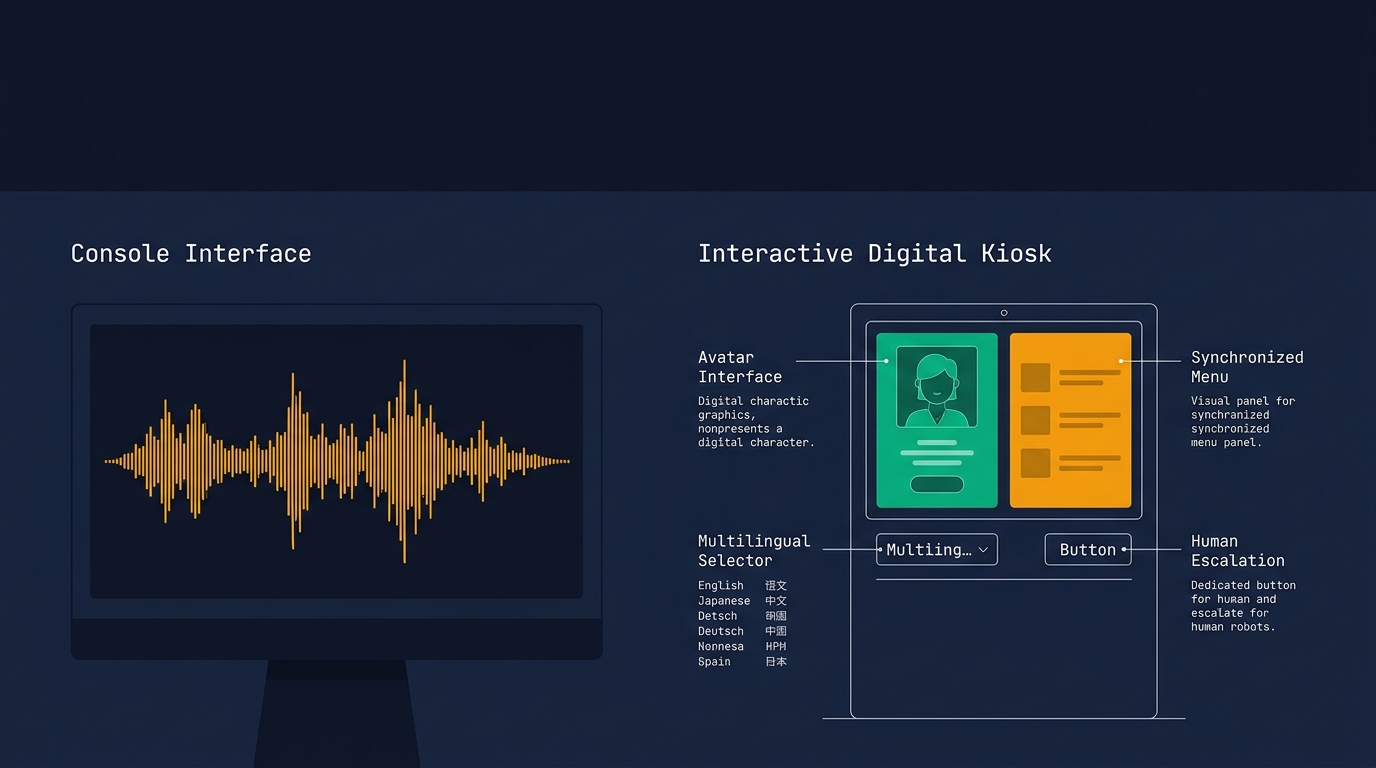
Conversational artificial intelligence has moved from experimental pilot programs to core production infrastructure across the quick service restaurant industry. High-volume restaurant brands have demonstrated that automated order processing at the drive-thru delivers measurable operational gains, higher throughput, and expanded ticket sizes.
Now that consumers treat conversational purchasing as an ordinary daily interaction, the sector is entering its next logical phase. Interactive video bots, deployed as visual AI Personas on digital drive-thru boards and self-service kiosks, expand the capabilities of audio-only systems.
By pairing conversational intelligence with dynamic visual merchandising and multilingual presentation, video bots solve persistent operational friction. Built on the Qaori platform, this transition is structured around workforce augmentation rather than labor displacement.
Validated Returns from Conversational Audio
Before analyzing visual AI Personas, operators must recognize why audio ordering succeeded. Between 2024 and 2026, enterprise drive-thru deployments established concrete commercial benchmarks.
The operational results centered on four key metrics:
- High Autonomous Containment: Leading voice deployments consistently resolve between 86 percent and 95 percent of customer orders without human intervention.
- Order Velocity: Automated intake consistently reduces lane transaction times by up to two minutes during peak traffic windows.
- Revenue Expansion: Algorithmic upselling and consistent menu suggestions increase average order value by 15 percent to 25 percent.
- Systemic Scalability: Major fast food brands expanded automated voice ordering from localized pilot tests to hundreds of commercial locations.
These metrics proved two fundamental realities. First, consumers will speak naturally to artificial intelligence if the interaction is responsive and accurate. Second, automated intake generates the margin expansion required to sustain restaurant profitability under rising wage pressure.
The Structural Ceiling of Audio Interfaces
Audio-only systems have proven their economic value, yet they operate under severe structural constraints. A disembodied voice coming from a speaker box cannot display food, cannot read facial sentiment, and cannot project brand personality.
When an audio bot recommends an item, it can only recite words over an analog speaker. Recited suggestions often feel robotic or intrusive, especially during high-noise drive-thru conditions. In contrast, visual interfaces allow customers to see the exact product configuration, portion size, and presentation.
Furthermore, an audio-only speaker box offers no visual cues for non-native speakers, hearing-impaired patrons, or customers navigating complex dietary requirements. The interface remains flat, transactional, and vulnerable to ambient acoustic interference.
Operational Advantages of Video Bots
Interactive video bots combine conversational large language models with real-time AI Persona animation and dynamic digital signage. This combination introduces four distinct operational advantages over legacy voice systems.
`` +-------------------+-----------------------------------+-----------------------------------+ | Capability | Voice AI (Audio Drive-Thru) | Video Bot (Interactive AI Persona) | +-------------------+-----------------------------------+-----------------------------------+ | Menu Presentation | Spoken recitation only | Dynamic high-definition display | | Customer Empathy | Monotone synthesized acoustic | Warm visual presence, gestures | | Language Support | Limited spoken dialect switching | Instant multilingual UI and voice | | Upsell Conversion | Modest audio-prompt compliance | Synchronized visual promotion | | Social Friction | Patrons feel rushed by voice box | Relaxed, self-paced exploration | | Escalation Safety | Latent transfer to crew headset | Continuous one-tap human button | +-------------------+-----------------------------------+-----------------------------------+ ``
Synchronized Visual Merchandising
Voice agents can only describe an item. A video bot presents high-resolution imagery and video alongside its conversational suggestions. When the AI Persona suggests an iced seasonal beverage or a side upgrade, the display immediately renders the visual asset. Visual cues trigger sensory appetite appeal, producing significantly higher conversion rates than spoken recommendations alone.
Multilingual Fluidity and Inclusivity
Language barriers create friction, ordering errors, and elevated stress for both guests and front-line workers. Video bots detect customer language preferences automatically or accept immediate visual inputs. The AI Persona switches dialects and text displays instantly, ensuring that non-native speakers receive courteous, clear, and dignified service without imposing translation burdens on store staff.
Consistent Baseline Empathy
Front-line hospitality workers face intense pressure during rush hours. Peak volume, staffing shortages, and repetitive tasks can degrade customer interactions. A digital video bot operates with infinite patience. It does not suffer emotional fatigue, does not project stress, and maintains an attentive, welcoming baseline tone across every transaction regardless of the hour.
Elimination of Social Ordering Anxiety
Many consumers experience social discomfort when placing complex, customized, or calorie-heavy orders with human cashiers. Similarly, human employees frequently feel uncomfortable pushing prescribed upsell scripts during hurried interactions. With an interactive video AI Persona, customers explore the menu without judgment. The bot reliably presents configured upsell logic, allowing patrons to accept or decline at their own pace.
The Qaori Augmented Workforce Model
The most significant hurdle facing artificial intelligence adoption in retail and food service is cultural resistance. Employees fear replacement, while consumers often resent impersonal corporate automation.
The Qaori platform addresses this friction by positioning video bots strictly as workforce augmenters rather than human replacements.
Transparent Helper Identity
A Qaori video bot introduces itself explicitly as an assistant supporting the on-site human crew. The AI Persona explains that its role is to log orders accurately so that human team members can focus on culinary preparation, order assembly, and food quality. This framing defuses consumer hostility and reinforces employee morale.
Continuous Human Escalation
Trust requires operational control. On a Qaori video bot interface, a prominent button to request human assistance remains visible and active from the first frame of the interaction. Providing a visible, frictionless safety net increases customer comfort. Patrons engage with the automated assistant more willingly because they know an employee is available with a single touch.
Conversational Invitation
Instead of forcing patrons into rigid menus, the AI Persona invites low-stakes exploration. The bot greets customers with a transparent and disarming introduction, noting that it is currently training to assist the kitchen crew and inviting the guest to test its ordering skills. This framing transforms a routine transaction into an engaging, participatory interaction.
Margin Preservation for Workforce Compensation
Store profitability directly dictates labor conditions. When automated video bots eliminate order errors and systematically capture high-margin upsells, restaurant locations secure expanded unit economics. These stabilized margins allow franchise operators to invest in better compensation, retention programs, and improved working environments for their kitchen and service staff.
Strategic Conclusion
The transition from voice assistants to interactive video bots is not a cosmetic change. It represents a fundamental shift in how physical retail environments deliver hospitality at scale.
Audio systems proved that conversational transactions work in production. Video bots supply the missing visual and emotional dimensions required for long-term customer loyalty and sustained revenue growth.
By implementing video AI Personas through an augmentation model, hospitality brands achieve operational velocity while elevating their human workforce. The future of fast service is neither fully manual nor coldly automated. It is an augmented environment where tireless digital assistants handle repetitive logistics so human workers can focus on craft and care.